
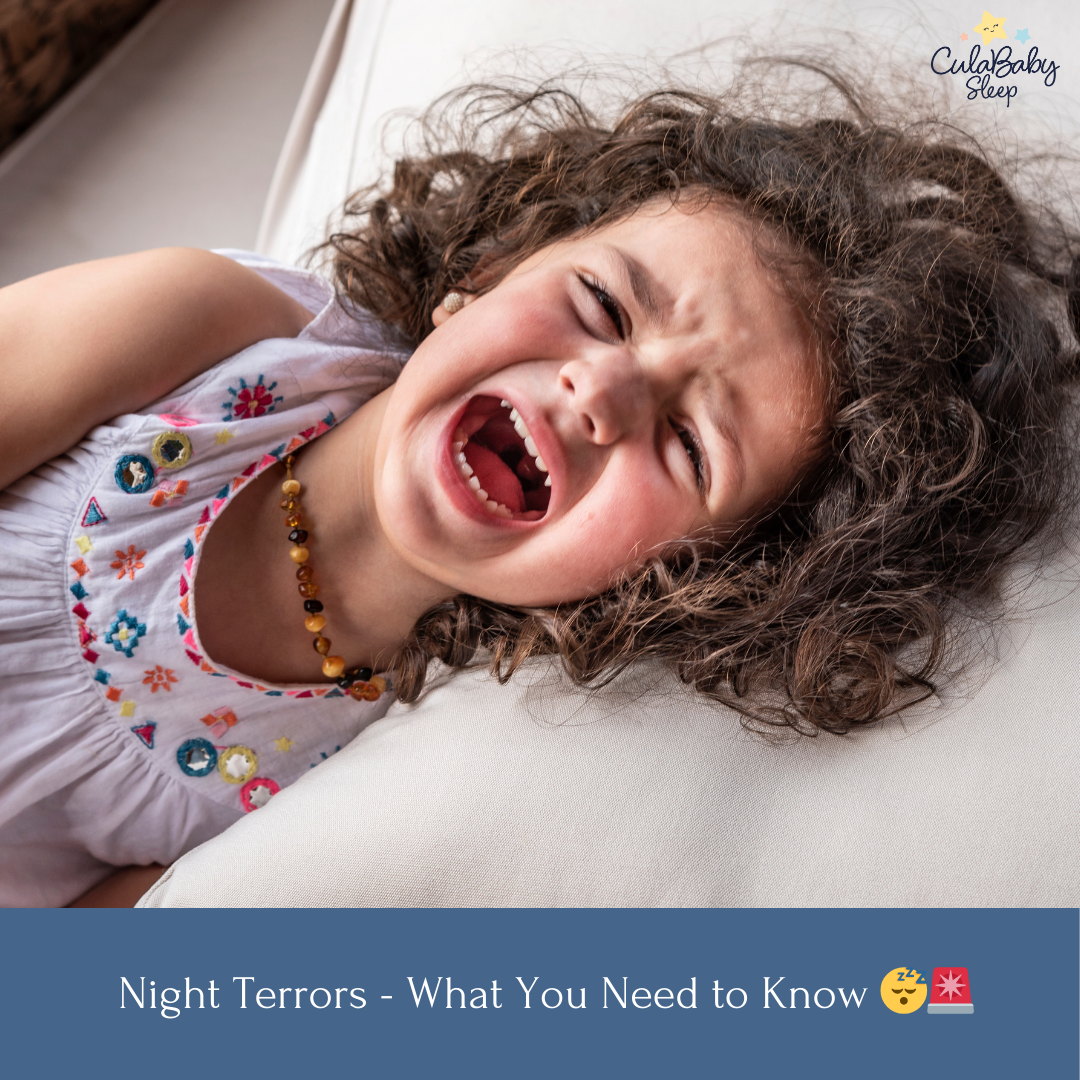
Night Terrors: What are they and how to prevent them from happening
Over the past week, during my Free Sleep Assessment Calls, so many parents have told me their little one is experiencing night terrors. And I completely understand—they are terrifying to watch! Before I became a Child Sleep Consultant, all three of my kids went through them at some stage, and at the time, I had no idea what was causing them.
💡 Here’s what I wish I had known sooner: Overtiredness is one of the biggest triggers! If your child suddenly screams, thrashes, or looks terrified in their sleep but isn’t fully awake, you’re likely dealing with a night terror. Unlike nightmares, night terrors happen during deep sleep (non-REM), and the next morning, your child won’t remember a thing.
So, what exactly are night terrors, and more importantly, how can you prevent them? Let’s break it down. ⬇️
What Are Night Terrors?
Night terrors are sudden, partial awakenings from deep sleep (non-REM sleep). Unlike nightmares, your child isn’t fully awake, won’t recognize you, and won’t remember it the next day. They usually happen in the first half of the night and can last anywhere from a few minutes to half an hour.
Signs of a Night Terror:
✔ Sudden screaming or crying
✔ Thrashing, kicking, or sitting up in bed
✔ Rapid breathing & sweating
✔ Eyes open but unresponsive
✔ No memory of the event the next day
What Causes Night Terrors?
Night terrors are often triggered by overtiredness or sleep disruptions. Other common causes include:
🛏 Not getting enough sleep (late bedtime, skipped naps)
🔄 Big changes in routine (travel, new school, illness)
😟 Stress or anxiety
🤒 Fever or illness
🧬 Genetics (family history of night terrors or sleepwalking)
If your child is overtired, their brain has a harder time transitioning between sleep cycles, making night terrors more likely.
How to Help Prevent Night Terrors
🛑 1. Prioritize Sleep & Avoid Overtiredness
-
Move bedtime earlier by 15–30 minutes if night terrors are happening often.
-
Stick to a consistent nap schedule (younger children still need daytime sleep).
-
Avoid long wake windows—overtiredness is the biggest trigger!
💤 2. Keep a Calming Bedtime Routine
-
Dim the lights, reduce stimulation, and avoid screens 1–2 hours before bed. Screens can hinder the production of melatonin our sleepy hormone preventing deep sleep.
-
Follow the same bedtime routine every night to signal that sleep is coming.
- Introduce some breathwork to help wind down, calm the nervous system and get their body ready for sleep.
🚫 3. Never Wake a Child During a Night Terror
-
They are not actually awake and will not respond rationally.
-
Trying to wake them can make the episode worse—instead, stay calm, ensure they are safe, and wait for it to pass.
🌡️ 4. Check for Other Disruptions
-
Keep the room cool, quiet, and dark.
-
Reduce noise and any disruptions that could trigger partial awakenings.
-
If your child is sick, in pain, or going through stress, address the root cause.
Final Thoughts
Night terrors look scary but are completely normal.
Most kids outgrow night terrors by age 6 or 7, but in most of the families I work with, they disappear completely once the child is getting enough sleep. A solid sleep schedule is key! 💛
In rare cases, an underlying medical issue could be contributing, so if you're concerned, always check with your GP.
If your child is struggling with frequent night terrors, I can help adjust their sleep schedule to make things easier! Book a free Sleep Assessment call now and let’s get them (and you!) sleeping better. 💛

Written by Liadhán Collins


Leave a comment
This site is protected by hCaptcha and the hCaptcha Privacy Policy and Terms of Service apply.