
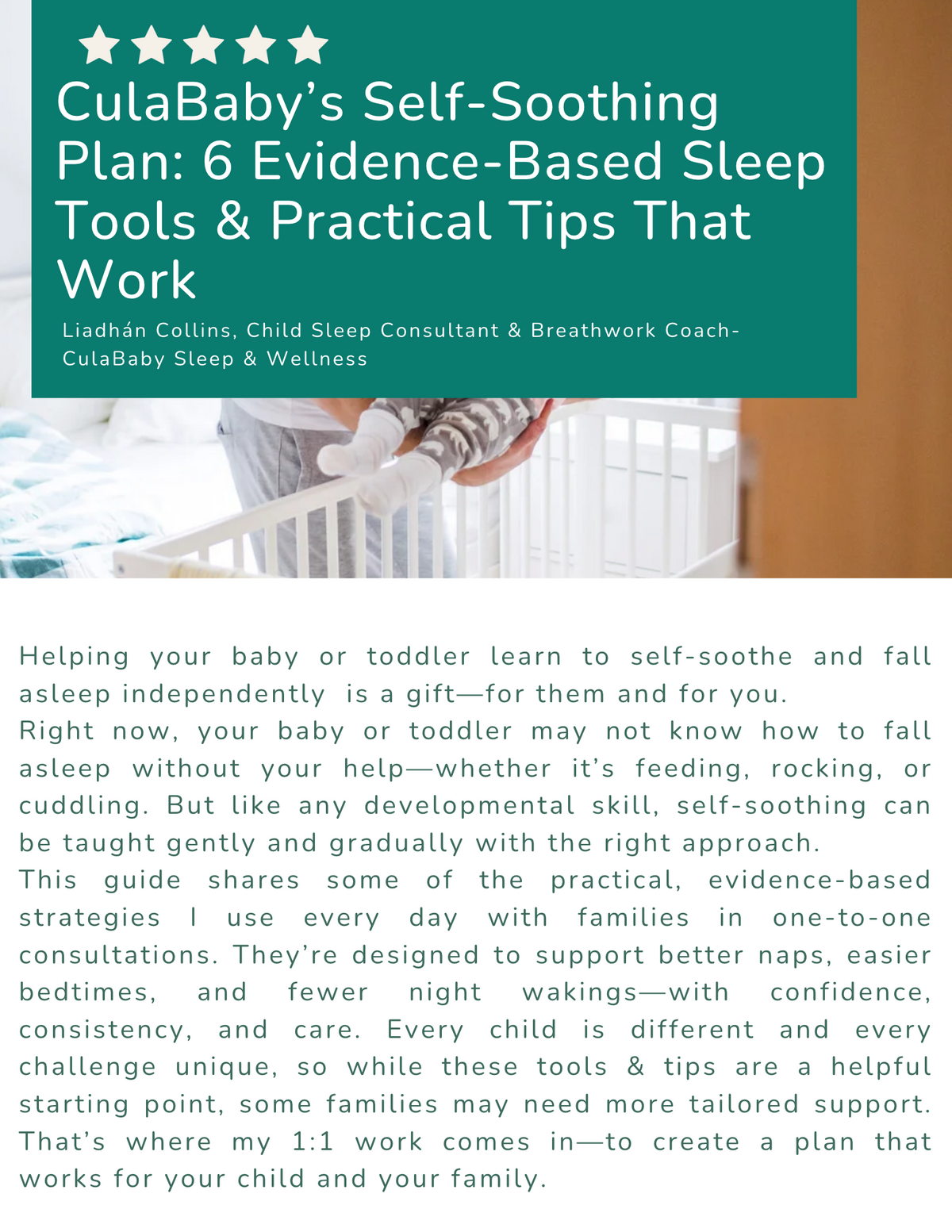
Baby Self-Soothing Guide – 6 Practical Sleep Tools
Does your baby need feeding, rocking or holding to fall asleep? Are you struggling with frequent night wakings, short naps or difficult bedtimes?
If your baby wakes every time you put them down, or needs your help to settle back to sleep throughout the night, you're not alone.
Often, these challenges are linked to sleep associations, overtiredness or difficulty settling independently.
The good news is that you can gradually help your baby learn new ways to fall asleep.
Created by Liadhán Collins, Certified Child Sleep Consultant and founder of CulaBaby Sleep & Wellness, this 12-page Self-Soothing Guide provides six practical sleep tools to help you work towards calmer bedtimes, more independent settling and better sleep.
What's Inside the Self-Soothing Guide?
You'll learn six practical strategies to support your baby's sleep:
1. Create the Right Sleep Environment
Learn how darkness, white noise, room temperature and a consistent bedtime routine can support better sleep.
2. Understand Sleep Timing and Sleepy Cues
Discover why overtiredness can contribute to bedtime struggles and night wakings, and how to recognise when your baby is ready for sleep.
3. Help Your Baby Fall Asleep Independently
Learn how to gradually move away from feeding, rocking or holding your baby to sleep by placing them in their cot calm but awake.
4. Support Your Baby Through Settling
Understand how to give your baby opportunities to practise settling while offering reassurance and responding to their needs.
5. Choose a Sleep Training Method That Suits Your Family
Explore three practical approaches to teaching independent sleep:
-
Gradual Withdrawal (Chair Method): Stay beside your child while gradually reducing your involvement.
-
Timed Check-ins: Give your child opportunities to settle independently while returning to offer reassurance.
-
Pick Up, Put Down: A more hands-on approach for babies who need additional comfort and support.
6. Understand What Sleep Progress Looks Like
Learn what to expect when introducing new sleep habits, how to recognise improvements and why consistency matters.
Bonus: Includes an age-based sleep reference chart covering naps, daytime sleep and bedtime from 6 months to 5 years.
Who Is This Guide For?
This guide is ideal if:
-
Your baby needs feeding, rocking or holding to fall asleep.
-
Your baby wakes as soon as you put them into their cot.
-
You're experiencing frequent night wakings.
-
Your baby struggles to settle independently.
-
Bedtimes have become difficult or unpredictable.
-
You're unsure which baby sleep training method to try.
-
You want practical advice on improving your baby's sleep routine.
A Supportive Approach to Teaching Independent Sleep
Teaching your baby to self-soothe doesn't mean ignoring their needs or expecting them to sleep through the night immediately.
It's about creating the right sleep conditions, choosing a settling approach that suits your family and gradually helping your child become more comfortable falling asleep with less assistance.
Every baby is different, and progress takes time.
Created by a Certified Child Sleep Consultant
I'm Liadhán Collins, founder of CulaBaby Sleep & Wellness and a Certified Child Sleep Consultant.
These are the practical sleep strategies I use when helping families address bedtime battles, sleep associations, frequent night wakings and difficulties settling independently.
My approach looks at the bigger picture, including daytime naps, bedtime timing, sleep environment and your child's individual needs.
Ready for Calmer Bedtimes and More Settled Nights?
Download your Self-Soothing Guide today for €30 and discover six practical sleep tools to help your baby develop more independent sleep habits.
If you'd prefer personalised support, you can also book a free 15-minute sleep assessment call to discuss your child's individual sleep challenges.
Choose options