
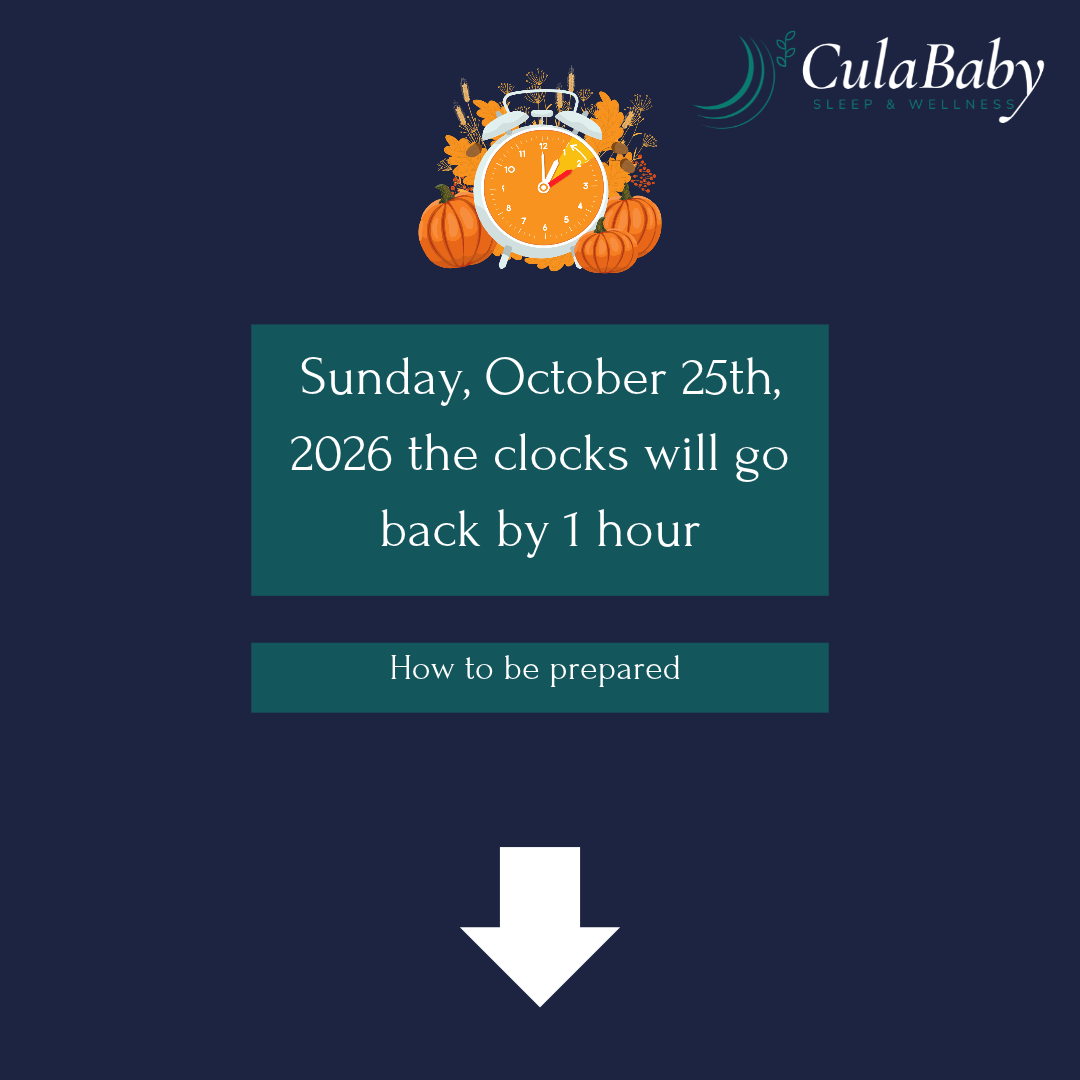
Clocks Going Back in Ireland 2026: How to Help Your Baby or Child Adjust
Worried about the clocks going back and your little one waking an hour earlier? Don't panic!
On Sunday, 25 October 2026, the clocks go back by one hour in Ireland as daylight saving time ends.
While many adults look forward to an extra hour in bed, parents of babies and young children know it doesn't always work that way!
If your little one normally wakes at 6:00 am, you might suddenly find yourself starting your day at 5:00 am. And if you're already dealing with early mornings, that's probably the last thing you want.
But here's the good news. Most babies and children will naturally adjust to the time change, and my advice for most parents is not to overthink it!
Just like when we travel to a different time zone, our internal body clock needs a little time to catch up. For most children, this happens naturally over a few days.
My recommendation? Simply move to the new time on Sunday and carry on with your usual routine. Don't panic about adjusting bedtimes, naps and mealtimes in advance. Give your child's body clock a few days to catch up after, be consistent and allow some flexibility if they're showing signs of tiredness.
However, for children who are already early risers, are particularly sensitive to change or really thrive on a structured routine, a more gradual adjustment in the days leading up to the clock change can be helpful.
Here are my tips as a Certified Child Sleep Consultant to help make the transition as smooth as possible.
1. For Most Children, Just Move to the New Time
For the majority of families, there's no need to spend the week leading up to the clock change adjusting your child's entire sleep schedule.
When Sunday arrives, simply follow the new clock time and aim to keep your child's usual routine as consistent as possible.
For example, if your child normally goes to bed at 7:00 pm, aim for 7:00 pm on the new clock.
They may feel tired a little earlier for the first few evenings or wake earlier than usual in the mornings, but that's completely normal.
Give their body clock a few days to catch up and adjust.
If they're clearly exhausted, don't be afraid to offer an earlier bedtime while they're adjusting. Likewise, you may need to be a little flexible with naps.
The important thing is not to panic or feel that you need to completely overhaul their routine because of a one-hour time change.
2. For Early Risers or Children Sensitive to Change, Try a Gradual Adjustment
If your little one is already waking at 5:00 or 5:30 am, is particularly sensitive to changes in their routine or really needs consistency around sleep, I recommend making small adjustments in the days leading up to the clock change.
Start on Wednesday, 21 October, and gradually push bedtime, naps and mealtimes 15 minutes later each day.
For example, if your child's usual bedtime is 7:00 pm:
| Day | Bedtime |
|---|---|
| Tuesday, 20 October | 7:00 pm (normal bedtime) |
| Wednesday, 21 October | 7:15 pm |
| Thursday, 22 October | 7:30 pm |
| Friday, 23 October | 7:45 pm |
| Saturday, 24 October | 8:00 pm |
| Sunday, 25 October | 7:00 pm (new clock time) |
By gradually shifting their routine, you're helping their body clock adjust before the clocks change.
My tip: Don't focus on bedtime alone. Where possible, gradually adjust naps, morning wake-up times and mealtimes too.
However, don't force your child to stay awake if they're clearly exhausted. An overtired child may find it harder to settle and stay asleep, so always consider their sleep cues alongside the clock.
Remember, this gradual approach isn't necessary for every child. It's simply an option for those who may find the transition a little more challenging.
3. Keep Your Morning Routine Consistent
One of the biggest challenges when the clocks go back is early waking.
If your child normally wakes at 6:00 am, their body clock may initially tell them it's time to get up at 5:00 am.
Try not to reinforce this earlier wake-up time by immediately starting the day.
Keep their bedroom dark and the environment calm until your desired morning wake-up time, as far as is practical for your child's age and needs.
Once it's time to start the day, open the curtains and expose them to natural daylight.
Why does this help?
Our internal body clock, also known as our circadian rhythm, is heavily influenced by light.
Morning light helps signal to the brain that it's daytime, while darkness supports the body's preparation for sleep.
Being consistent with morning light and wake-up times can help your child's body clock adjust to the new schedule.
4. Be Mindful of Light in the Evenings
As the evenings become darker, we're naturally spending more time indoors with artificial lighting.
Bright light in the evening can interfere with the body's natural production of melatonin, the hormone that helps regulate sleep.
In the hour leading up to bedtime, try to:
-
Dim the lights around your home.
-
Create a calm, relaxing environment.
-
Avoid bright overhead lighting where possible.
-
Keep bedrooms dark and comfortable for sleep.
Natural daylight during the morning and daytime is also helpful for supporting a healthy sleep-wake rhythm.
5. Limit Screens Before Bedtime
Screens can make bedtime more challenging, particularly for toddlers and older children.
Bright screens and stimulating content can interfere with winding down for sleep.
Where possible, switch off screens at least an hour before bedtime and replace them with calmer activities such as reading, puzzles or quiet play.
A predictable wind-down routine helps children recognise that bedtime is approaching.
6. Watch Your Child's Sleep Cues
Whether you're moving straight to the new time or gradually adjusting your child's schedule, remember that your child's sleep needs are more important than the clock.
If your baby is rubbing their eyes, becoming fussy, losing interest in play or showing other signs of tiredness, don't feel you need to keep them awake just to reach a particular bedtime.
This is especially important for younger babies who may struggle with longer periods of wakefulness.
If your child becomes overtired, settling at bedtime and overnight sleep may become more difficult.
My advice is to use the clock as a guide, but always consider your child's age, naps, wake windows and sleep cues.
A slightly earlier bedtime for a few nights is absolutely fine if that's what your child needs.
7. What If Your Child Continues Waking Early?
It's normal for some children to take several days to adjust, and others may need a week or two.
However, if your little one was waking early before the clocks changed, the time change itself is unlikely to be the underlying problem.
Early waking can be influenced by several factors, including:
-
Too much or too little daytime sleep.
-
Bedtime timing.
-
How your child falls asleep and resettles overnight.
-
Their individual sleep needs and body clock.
- What you do when they wake early.
If early waking continues, it's worth looking at their overall sleep schedule rather than simply pushing bedtime later.
Remember, a later bedtime doesn't necessarily mean a later morning wake-up.
For some children, particularly those who are already overtired, keeping them awake longer can make sleep more challenging.
A Final Word From Me
The clocks going back can feel daunting, especially if you've worked hard to establish a good sleep routine or you're already struggling with early mornings.
But my biggest piece of advice is don't overthink it!
For most children, simply moving to the new time on Sunday, keeping their routine consistent and giving their body clock a few days to adjust is all that's needed.
If your child is an early riser or particularly sensitive to change, making small adjustments beforehand may help ease the transition.
And remember, you don't need to get everything perfect. Focus on maintaining a predictable routine, managing light exposure and responding to your child's individual sleep needs.
Need help with your little one's sleep?
I'm Liadhán, a Certified Child Sleep Consultant and founder of CulaBaby Sleep & Wellness. I help families understand their children's sleep and establish healthy, sustainable sleep habits.
If you're dealing with early waking, frequent night wakings, short naps or bedtime battles, book a FREE 15-minute sleep assessment call and we can chat about what's happening and how I can help.
Book Your Free 15-Minute Sleep Assessment Call

Written by Liadhán Collins


Leave a comment
This site is protected by hCaptcha and the hCaptcha Privacy Policy and Terms of Service apply.